
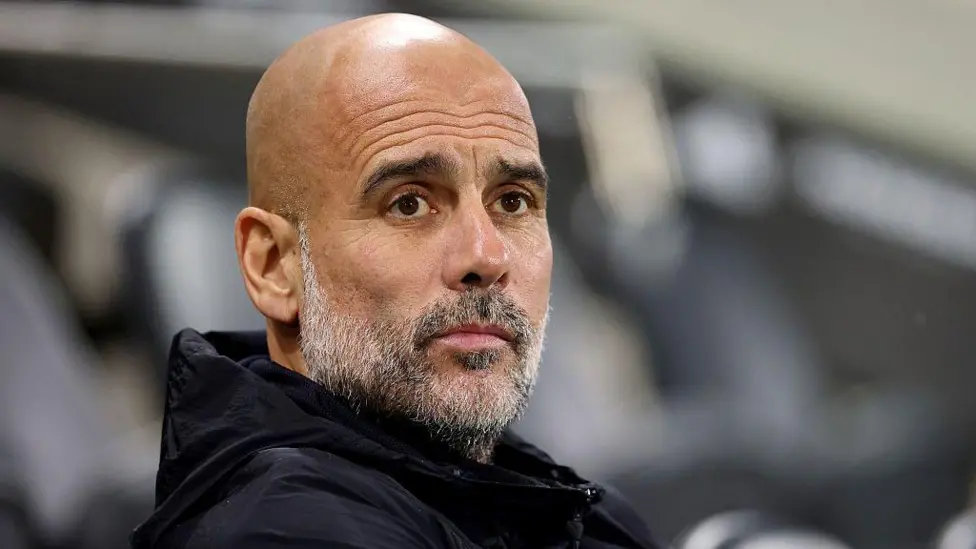
Manchester City’s return to the heart of the Premier League title conversation has been driven less by dramatic transfer moves and more by Pep Guardiola’s ability to refine his tactical framework. After a period of inconsistency, City now look re-energised, structured and ruthless — familiar hallmarks of a Guardiola side at its peak.
Rather than reinventing his philosophy, Guardiola has focused on subtle but effective adjustments that have restored balance and control, allowing City to once again dictate matches against elite opposition.
Restoring Control in Midfield
One of the most noticeable changes has been Manchester City’s renewed emphasis on midfield stability. Guardiola has prioritised control in central areas, ensuring City can manage games through possession while remaining protected against counter-attacks.
By positioning a deeper midfielder closer to the defensive line during build-up, City have reduced exposure when attacks break down. This has improved their rest defence — a crucial element in Guardiola’s system — and allowed full-backs to push higher without leaving the back line vulnerable.
The result has been cleaner circulation of the ball and fewer transitional moments for opponents to exploit.
Flexible In-Game Structures
Guardiola’s tactical flexibility has also played a key role in City’s resurgence. While nominal formations remain important, City’s shape frequently changes depending on game state.
In possession, City often morph into a box midfield, with players stepping inside from wide areas to overload central zones. Out of possession, the team quickly drops into a compact structure, closing passing lanes and forcing opponents into low-percentage wide deliveries.
This adaptability has made City harder to predict and more efficient across different phases of play.
Improved Defensive Compactness
Defensive improvement has been another pillar of City’s return to title contention. Guardiola has tightened spacing between the lines, ensuring that pressing triggers are clearer and more coordinated.
City’s press now appears more selective rather than constant, conserving energy and maintaining structure. When pressure is applied, it is decisive, with multiple players stepping in unison to recover possession quickly.
This collective discipline has significantly reduced the number of clear chances conceded, especially in high-stakes matches.
Maximising Attacking Efficiency
While Manchester City continue to dominate possession, Guardiola has refined how his team uses the ball in advanced areas. There is now a clearer focus on timing and movement rather than constant circulation around the box.
Players are encouraged to make sharper runs between defensive lines, creating space for late arrivals and cut-back opportunities. This has increased City’s shot quality, even when overall shot numbers remain similar.
Rather than forcing openings, City are now more patient — waiting for the right moment to strike.
Mentality and Experience at the Forefront
Beyond tactics, Guardiola has leaned heavily on experience and game management. City’s players have shown improved composure during difficult spells, controlling tempo and minimising risk when protecting leads.
This maturity has been especially evident in tight fixtures, where City now appear comfortable winning without dominating every phase of play.
Such control is often the difference between contenders and champions.
City Back in the Title Picture
Manchester City’s renewed title challenge is the product of Guardiola’s attention to detail rather than sweeping changes. By restoring balance, improving defensive structure and refining attacking efficiency, he has guided City back to a level that makes them formidable once again.
As the season progresses, these tactical foundations could prove decisive. If consistency follows structure, Manchester City’s place in the title race will be more than justified.