
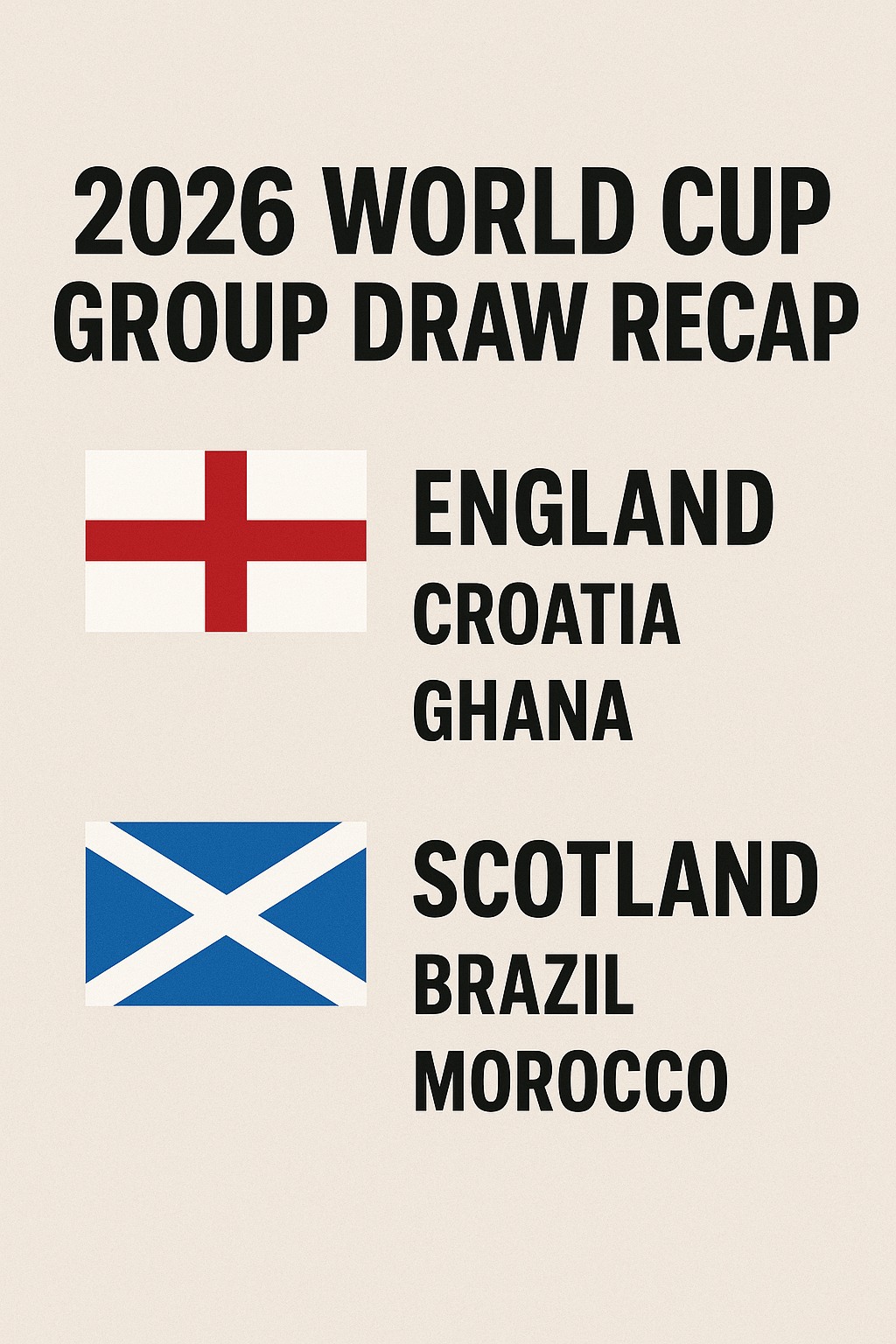
The final draw for the 2026 FIFA World Cup has delivered a mix of familiar challenges and exciting new matchups for the home nations, with both England and Scotland learning their group-stage opponents ahead of next summer’s expanded tournament.
England Set for Tactical Battles Against Croatia and Ghana
England’s route through the group stage will feature a blend of European experience and African intensity. Drawn alongside Croatia and Ghana, the Three Lions are preparing for a group that promises to test their adaptability.
Croatia, known for their technical discipline and tournament pedigree, remain one of Europe’s most consistent performers on the global stage. Their midfield strength and big-game experience ensure they will be among the toughest opponents England could have faced.
Ghana, meanwhile, bring speed, physicality, and unpredictability—qualities that have historically caused problems for European sides. With a new generation of emerging talent, the Black Stars will likely play with freedom and ambition in a group where they have nothing to fear.
Manager Gareth Southgate is expected to welcome the variety of styles, seeing it as an early test of the squad’s maturity and flexibility as England aim for a deep run in 2026.
A Tough Path Awaits Scotland With Brazil and Morocco
Scotland’s challenge is significantly steeper, having been drawn into one of the most eye-catching groups of the tournament. They face five-time world champions Brazil and a strong Morocco side that reached the semifinals at the 2022 World Cup.
Brazil’s reputation speaks for itself—attacking flair, individual brilliance, and an unmatched tournament history. Even during transitional periods, the Seleção remain one of the most feared opponents in world football.
Morocco, meanwhile, have evolved into one of the strongest teams from the African continent. Their balance of defensive organisation, creative midfielders, and clinical forwards makes them a formidable threat. For Scotland, every point in this group will require discipline, resilience, and clinical finishing.
Manager Steve Clarke will see the tournament as an opportunity for his squad to test themselves against the world’s elite, with the underdog role offering freedom to surprise.
A Tournament Shaped by New Format and Big Expectations
The 2026 World Cup—set to be hosted across the United States, Canada, and Mexico—will be the largest in history, featuring 48 teams and a new group-stage structure. Teams will need to adapt quickly to the expanded schedule, travel demands, and diverse playing environments across North America.
For the home nations, the draw has created compelling narratives:
-
England must navigate a group that combines experience and unpredictability.
-
Scotland face one of the toughest assignments of the tournament.
-
Both teams will be eager to build momentum early as they aim to progress into the newly formatted knockout rounds.
With the countdown to 2026 now gathering pace, anticipation continues to grow as fans prepare for a global spectacle filled with dramatic matchups and historic opportunities.